
Maple and oak are both beautiful hardwoods, but choosing between them isn’t as simple as picking a color you like.
One shows off rich character and texture, the other brings clean, modern simplicity. Both can last a lifetime, but they perform differently once they’re underfoot.
We’ll break down how maple vs oak flooring compare in looks, durability, cost, and maintenance so you can make a choice that fits your home perfectly.
Key Notes
- Maple is harder (1450 Janka) but shows scratches quickly, while oak hides daily wear better.
- Oak stains evenly in any color; maple resists stain and is best left natural.
- Red oak is the most affordable at $8-15/sq ft installed, whereas maple runs $9-16.
- Maple suits modern minimal styles; oak fits traditional and rustic interiors.
Quick Comparison: Maple vs Oak at a Glance
| Feature | Maple | Oak (Red & White) |
|---|---|---|
| Appearance | Light, creamy, smooth grain | Richer tones, visible open grain |
| Hardness (Janka) | ~1450 | Red Oak ~1290, White Oak ~1360 |
| Scratch Resistance | Very high but scratches show easily | High and hides wear well |
| Moisture Resistance | Stable but sensitive to humidity swings | White oak is more water-resistant |
| Stainability | Difficult to stain evenly | Excellent stain absorption |
| Cost (installed) | $9–$16 per sq. ft. | $8–$15 per sq. ft. |
| Best For | Modern, bright interiors | Traditional, rustic, or transitional homes |
| Maintenance | Requires regular cleaning | More forgiving of dust and wear |
Appearance & Grain Pattern
If you’re comparing looks alone, oak and maple feel like opposites.
Oak Flooring
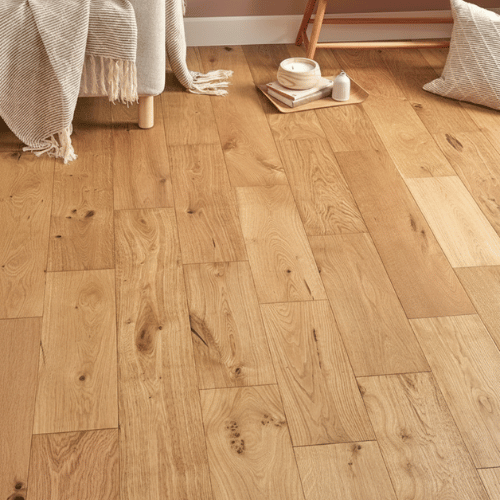
Oak has a bold, open grain with visible texture and movement – you’ll often see rings, streaks, and even tiger-striped patterns that give it personality.
Red oak leans warmer, with pink and red undertones, while white oak carries cooler shades of brown and gray. Because it’s more porous, oak also takes stain beautifully, giving you endless finish options.
Maple Flooring
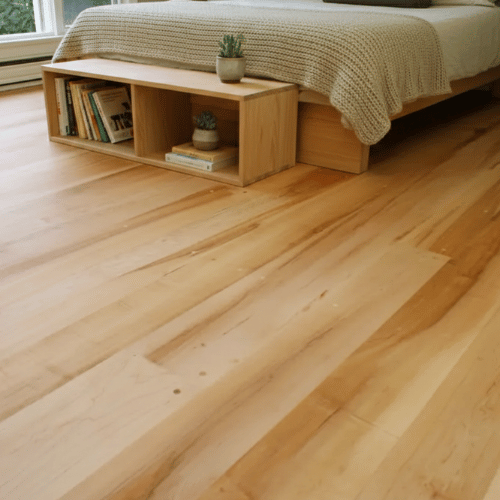
Maple, on the other hand, has a smooth, subtle grain that feels calm and consistent. Its fine texture and pale creamy tone create a clean, airy look perfect for modern, Scandinavian, or minimalist interiors.
You’ll sometimes see light swirling or birdseye patterns, but overall it’s sleek and understated – a floor that lets the rest of your space shine.
Durability & Hardness
When it comes to raw hardness, maple wins. Hard maple (or sugar maple) ranks about 1450 on the Janka hardness scale, while red oak sits at 1290 and white oak at 1360.
That makes maple more resistant to dents and surface damage – one reason it’s used for gym floors and basketball courts.
When Harder Doesn’t Always Mean Better
However, hardness isn’t the whole story.
Maple’s smooth grain shows scratches and dust more clearly, so even though it resists damage, you might see imperfections sooner. Oak, while slightly softer, hides daily wear thanks to its open grain pattern. That makes oak a little more forgiving in real-life homes with pets, kids, or constant foot traffic.
Both are strong enough for generations of use. The right choice depends on whether you value a harder surface (maple) or a more forgiving look (oak).
Moisture & Dimensional Stability
All wood expands and contracts with humidity, but some species handle it better.
- Maple’s dense, tight grain gives it slightly better dimensional stability, meaning it’s less likely to swell or shrink through seasonal humidity changes.
- Oak (especially red oak) is more porous, so it reacts more noticeably to moisture in the air. White oak performs better here, offering greater resistance to water absorption.
Either way, proper acclimation before installation and consistent indoor humidity will prevent most issues like warping or cupping.
Color & Aging Over Time
Both woods change tone over time, but in different ways.
Maple starts out pale and light – a creamy blonde that brightens any space. With age and sunlight exposure, it tends to yellow or darken to a warm honey-gold. Because its color is so light to begin with, that shift is usually more noticeable.
Oak begins with richer tones – red oak often reddish-brown, white oak leaning toward taupe or gray. As it ages, oak deepens gently into a golden amber. The change is subtle, and most homeowners actually like the way oak floors warm up over time.
If you want to slow the color shift, use UV-blocking finishes and window treatments to limit sunlight exposure.
Stainability & Finish Options
Here’s where oak shines. Its open pores absorb stain evenly, which means you can achieve almost any color – from pale neutrals to deep espresso tones. This flexibility makes oak a favorite for homeowners who want to match trim, cabinetry, or evolve their design over time.
Maple, in contrast, is notoriously difficult to stain evenly. Its tight grain resists stain penetration, often leading to blotchy or uneven results. That’s why most maple floors are finished in their natural light tone or with a subtle tinted sealant.
If you love light, natural floors, maple delivers. If you want rich, dark finishes, oak is easier to work with.
Installation & Workability
Oak is the installer’s friend. Its open grain and moderate hardness make cutting, sanding, and nailing smooth and predictable.
Maple’s density, while great for durability, makes it tougher to work with – it can burn during cutting, dull tools faster, and requires more care during sanding to avoid marks.
Cost Comparison
In 2025, both species are priced in a similar range, but oak generally wins on affordability – especially red oak.
Here’s a quick breakdown:
- Red Oak: $4–$8 per sq. ft. (materials); $8–$15 installed.
- White Oak: $5–$9 per sq. ft.; $9–$16 installed.
- Maple: $5–$9 per sq. ft.; $9–$16 installed.
Maple tends to cost slightly more because it’s less abundant and denser to process. White oak, with its growing popularity, also commands a premium.
Factors like grade (select vs character), finish, and solid vs engineered construction affect the final price too.
Rule of Thumb:
If budget is your top priority, red oak usually gives you the best value. If you’re chasing a clean designer look, maple may be worth the small premium.
Maintenance & Longevity
Both floors can last for decades – even a lifetime – if properly cared for. The main difference lies in visibility and upkeep.
- Maple’s light tone and smooth finish tend to show dirt, dust, and scratches more easily. You’ll need to sweep or vacuum regularly and use mats to protect high-traffic areas.
- Oak’s grain pattern hides a lot of those day-to-day marks, so it can go a bit longer between deep cleans.
Both can be sanded and refinished multiple times, restoring them to like-new condition. With steady humidity control and proper care, it’s not unusual for either wood to last 50+ years.
Best Use Cases & Design Pairings
Oak Fits Best In:
- Traditional or farmhouse-style homes
- Living rooms, dining rooms, and hallways
- Spaces where you want visible character and warmth
- Homes with pets or kids where hiding wear is a plus
Maple Fits Best In:
- Modern, minimalist, or Scandinavian interiors
- Kitchens and high-traffic areas (for hardness)
- Small spaces where light-colored floors can open up the room
- Households that want a clean, smooth aesthetic
Which Is Better for You?
There’s no one-size-fits-all winner, as it depends on what matters most to you.
- Durability: Maple wins on hardness.
- Maintenance: Oak wins on forgiveness.
- Aesthetic: Maple = modern, Oak = timeless.
- Budget: Red oak is the most affordable.
- Moisture Resistance: White oak leads.
- Stain Flexibility: Oak again.
If your home gets heavy foot traffic or you love a bright, minimal look, maple will serve you well. If you prefer rich character and easier upkeep, oak is hard to beat.
Either way, you’re investing in a hardwood that will last for generations.
Frequently Asked Questions
Which is better for homes with pets — maple or oak?
Oak is generally the better choice for pet owners. Its open grain hides scratches and scuffs better than maple’s smooth surface, which can show marks more easily.
2. Can maple or oak flooring be installed over radiant heating?
Yes, both can work with radiant heating, but engineered versions of either species are recommended for stability. Proper acclimation and professional installation are key to preventing gapping or warping.
3. Does maple or oak hold up better in humid climates?
White oak performs best in humidity-prone environments thanks to its closed-grain structure and moisture resistance. Maple is slightly more stable overall but needs consistent indoor humidity levels.
4. Which adds more resale value to a home?
Both are considered premium hardwoods, but oak typically has broader appeal due to its classic grain and stain versatility. Maple can attract buyers who prefer a cleaner, modern look.
Conclusion
Both maple and oak flooring have earned their place as hardwood favorites. Maple brings a sleek, smooth finish with impressive hardness that holds up in busy homes and modern interiors. Oak, with its rich grain and forgiving nature, offers a timeless warmth that hides everyday wear and fits nearly any design style.
While maple wins on strength, oak often wins on practicality – and either choice can last for decades with the right care.
If you’re still torn on maple vs oak flooring, let us help. Book your free in-home flooring appointment and see both options side by side. We’ll guide you through the best fit for your home’s look, lifestyle, and budget – all with no pressure and no guesswork.

