
Quick Answer
Every carpet we install is solution dyed polyester in a texture cut pile, so the decision is not which fiber, it is which construction. Pile density and twist predict how a carpet wears. Face weight on its own does not. A cushion is included with every job, and its density matters as much as the carpet above it.
Key Notes
- Pile density is the number to read. The Carpet and Rug Institute formula is 36 times face weight divided by pile thickness in inches. Results usually land between 1,000 and 7,000. Under 2,100 is light duty. Above 3,100 holds up in a busy house.
- Face weight alone will mislead you. Two carpets at the same 70 ounces can differ by hundreds of points in density, because pile thickness moved with the weight. Always ask for both numbers together.
- Twist is the tiebreaker. Most residential carpet runs 2.5 to 6.0 twists per inch, measured under ASTM D1423. Look for 5 or more anywhere traffic concentrates. Below 3 the tuft blooms open and mats early.
- Solution dyeing puts color inside the fiber. Pigment goes into the molten polymer before extrusion rather than onto the surface afterward. That is why these carpets resist fading and survive cleaners that would strip a surface dyed fiber, and why the polyester holds under 1 percent moisture.
- The cushion is included, not upsold. Every carpet job ships with an 8 pound density cushion carrying a 2.0 R-value, a moisture barrier with antimicrobial protection, and a 20 year transferable abrasive wear warranty that covers stairs.
- Cleaning is a warranty condition. Manufacturers require professional hot water extraction every 12 to 24 months depending on the mill, using products carrying the CRI Seal of Approval. Keep the invoices or a future claim gets denied.
Table of Contents
- What Our Carpet Is Made Of
- The Numbers That Actually Predict Wear
- Why Face Weight Fools People
- Why We Install Texture Cut Pile
- The Cushion Comes With The Carpet
- What Carpet Warranties Actually Require
- Matching Specs To The Room
- Questions Homeowners Ask In The Living Room
What Our Carpet Is Made Of
Color is what people shop. Construction is what they live with. Every carpet we install is solution dyed polyester, so the fiber argument is settled before a sample comes out of the bag, and the real decision moves to the numbers printed on the back of it.
Solution dyeing means pigment is mixed into the molten polymer before the fiber is extruded. Color runs the full cross section rather than sitting on the outer surface. Three things follow. Sunlight has far less to fade, because there is no surface dye layer to strip. Cleaning chemistry has far less to lift, which is why these carpets tolerate products that would bleach a surface dyed fiber. And a worn tuft does not reveal a pale core the way a surface dyed one does.
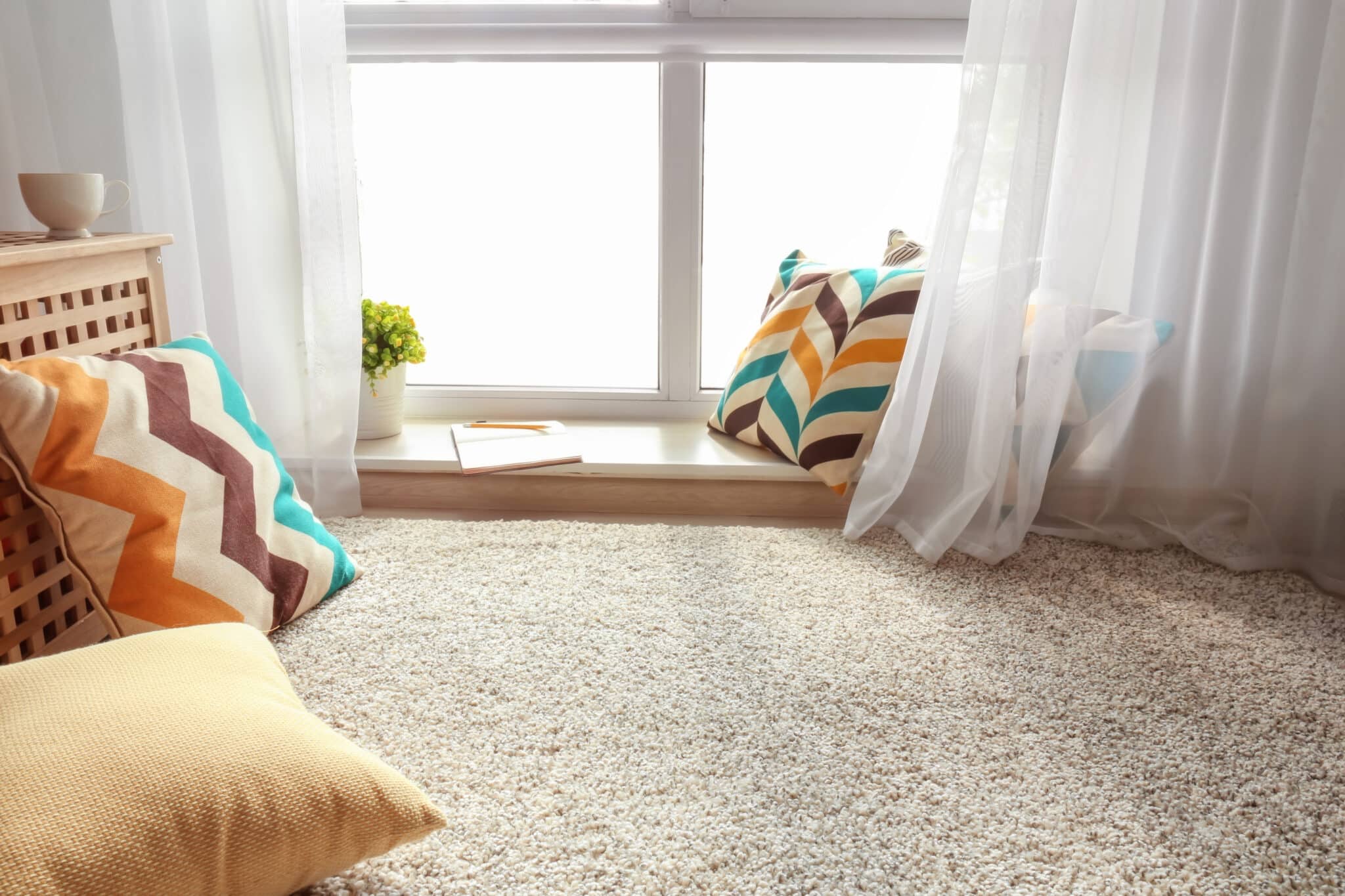
The other spec worth knowing is BCF, bulked continuous filament. The yarn is one unbroken strand rather than short staple fibers spun together, so it sheds and fuzzes far less in the first year. Our crews notice the difference at the vacuum stage on a new install.
Because the pigment is locked into the polymer, the same fade and bleach resistance applies across the whole color range. A cool gray behaves the same way as a warm tan.


One honest weakness is worth naming. Polyester holds almost no moisture, roughly half a percent regain, which is exactly why it shrugs off water soluble spills. That same low surface energy attracts oil based soil, and oil is the dominant soil in entries, kitchens and homes with dogs. The answer is not a different fiber. It is a denser carpet where traffic concentrates, and cleaning on schedule rather than after it shows.
The Numbers That Actually Predict Wear
Flip any carpet sample over and the same handful of figures appear. Three of them tell you how it will wear. One gets quoted constantly and means less than people assume.
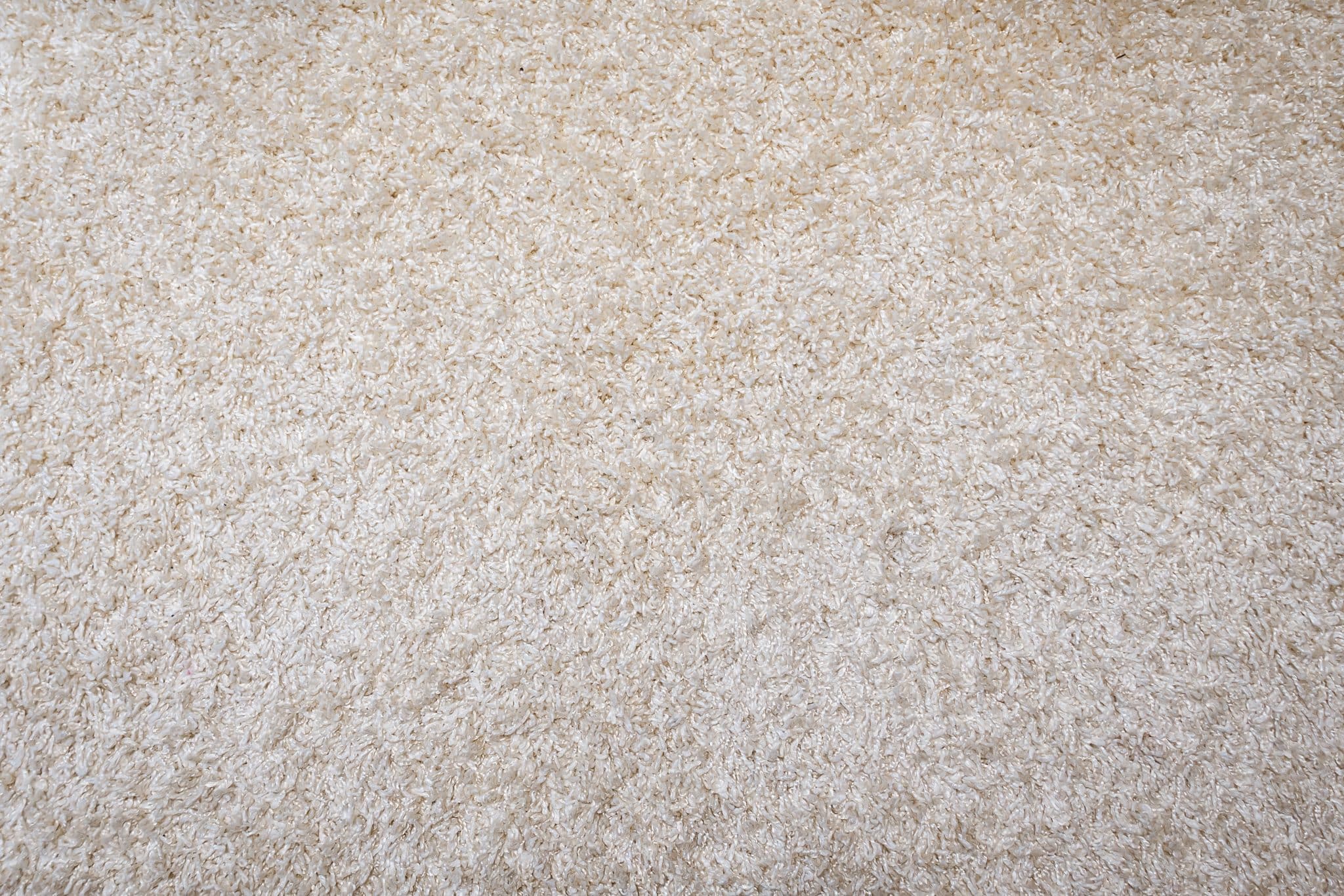
The CRI formula is 36 times face weight divided by pile thickness in inches. A 32 ounce carpet at 1/4 inch calculates to 4,608. Under 2,100 is light duty only. Above 5,000 is commercial territory.
Twist keeps a cut tuft from blooming open and matting. Most residential carpet runs 2.5 to 6.0, counted per ASTM D1423. Untwist one inch of a single tuft and count the turns yourself.
Counts pile yarn only, never the backing. On its own it says nothing about pile thickness, which is why it is the most misquoted figure on the tag. Useful only when paired with pile thickness.
Density, not softness, is what keeps the carpet backing from flexing underfoot. Flexing is what breaks the latex bond between pile and backing on a pad that is too soft.
Here is the whole spec sheet translated, with the ranges you should expect to see on a residential sample.
| Spec | Typical Residential Range | What It Measures | What To Look For |
|---|---|---|---|
| Face weight | 30 to 80 oz per square yard | Weight of pile yarn only, backing excluded | Useless alone. Pair it with pile thickness |
| Pile thickness | 0.50 to 0.65 in | Height of the yarn above the backing | Shorter at the same weight means denser |
| Pile density | 1,000 to 7,000 | How tightly yarn is packed, from the CRI formula | 3,100 and up for a busy household |
| Twist | 2.5 to 6.0 twists per inch | Turns per inch of yarn, per ASTM D1423 | 5 or more where traffic concentrates |
| Gauge | 5/32 in | Spacing between needle rows across the width | 5/32 is the standard fine residential gauge |
| Tufts per inch | 6 to 11 per inch | Spacing of tufts along the length | Higher figures read as a finer surface |
| Cushion density | 6 to 8 lb per cubic foot | Firmness of the pad, not its thickness | 8 lb, and firmer as traffic rises |
| Product warranty | 15 to 25 years | Coverage against wear, staining and soiling | Check whether pet accidents are included |
These are the ranges a residential sample should fall inside. Ask for the figures in writing rather than accepting a general description of the carpet as heavy or dense.
Why Face Weight Fools People
Face weight is the number salespeople reach for because it is a single figure that sounds like quality. It measures the weight of pile yarn in a square yard and nothing else. It does not know how tall that yarn is.
Run the arithmetic and the problem shows immediately. Take two carpets that both weigh 70 ounces. Build one at 18/32 of an inch and it calculates to 4,480. Build the other at 20/32 and it calculates to 4,032. Same yarn, same weight, nearly 450 points of density apart, because the taller pile spread that yarn over more height. The shorter, tighter one packs the same material into less space, and packed yarn is what resists crushing.
This also runs the other direction. A 65 ounce carpet built short can land within a hundred points of a 50 ounce carpet built shorter still. Fifteen ounces of yarn separate them on paper and almost nothing separates them underfoot. Ask for face weight and pile thickness together, run the number, then check the twist. Three figures, two minutes.
Run The Numbers On Your Own Floor
Carpet color shifts under showroom lighting and nap direction changes how it reads across a room. A Go Flooring consultant brings samples to your house with the face weight, pile thickness and twist on the tag, so you can check the density yourself before you decide.
- Free In-Home Consultation
- Cushion Included
- Lifetime Installation Warranty
Why We Install Texture Cut Pile
Every carpet in our lineup is a texture construction. That means a cut pile with medium to high twist and deliberately varied tuft direction, and the choice is not an accident.
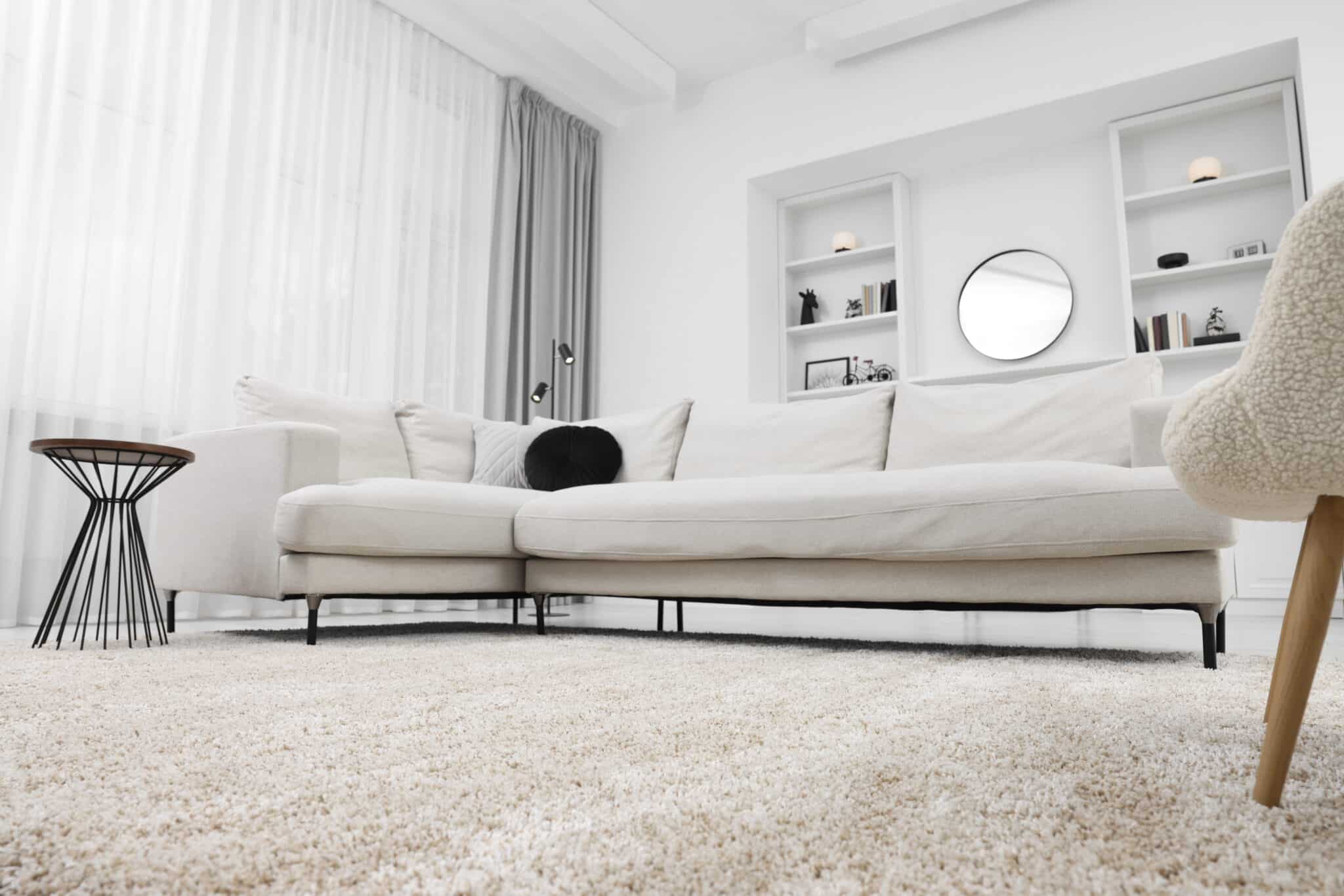
Texture does two jobs at once. Varied tuft direction scatters light so footprints and vacuum lines do not print the way they do on a plush or a velvet, which are the constructions that make a formal room look tracked ten minutes after you leave it. And because every tuft is a severed end, damage stays where it starts.
That second point is why we do not stock a loop carpet. In a continuous loop, a claw that catches one loop transfers tension straight to the next, and the yarn unravels in a line across the room. The trade calls it zippering, and one partly pulled loop can go unnoticed until a vacuum strips several feet of it in seconds. A cut pile cannot do it. Keeping the whole lineup in texture removes the most common carpet failure in a house with a cat or a dog.
One label worth translating: trackless is a marketing name for a texture cut pile, not a separate construction. It reduces how much tracking shows. It does not eliminate it.
"We had the same carpet for over twenty years and had no idea what to even ask for. The Go Flooring rep put two samples on the floor that weighed exactly the same and showed us why one was denser than the other, which is not a conversation I expected to have in my own living room. We put the denser one through the hallway and stairs. The pad was included, so there was no back and forth about upgrading it."
Rosa T.
Homeowner, Charlotte NC
The Cushion Comes With The Carpet
Cushion is where most carpet purchases get muddied, because it is usually sold as a tier list at the end of the appointment. We took that conversation off the table. A cushion goes under every carpet we install, on every job, at no extra cost.
Density is the cushion spec that matters, not softness. Ours runs 8 pounds per cubic foot, tested under ASTM D3574, with a 2.0 R-value and FHA HUD Class 2 compliance. Eight pound density is firm enough to keep the carpet backing from flexing underfoot, and that flexing is what breaks the latex bond between pile and backing on a soft pad.
The moisture barrier is the part homeowners underrate. It stops a spill at the cushion instead of letting it reach the subfloor, and it still allows subfloor vapor to release upward, which is what keeps mold and mildew from setting up underneath. Antimicrobial protection is built into the product.
The mistake we see most often is a homeowner assuming an included pad must be a builder grade default and paying elsewhere to upgrade past it. Ours carries a 20 year transferable abrasive wear warranty that covers stairs, up to 90 percent recycled content, and Green Label Plus indoor air quality certification.
What Carpet Warranties Actually Require
Carpet warranties are conditional documents. Most denied claims are not close calls. They are maintenance and paperwork failures, and three conditions do most of the damage.
Coverage itself varies. Product warranties in this category generally run 15 to 25 years against wear, staining and soiling, and some styles add pet coverage that includes accidents. Ask which one you are getting rather than assuming, because pet coverage is the clause homeowners most often expect and most often do not have.
Matching Specs To The Room
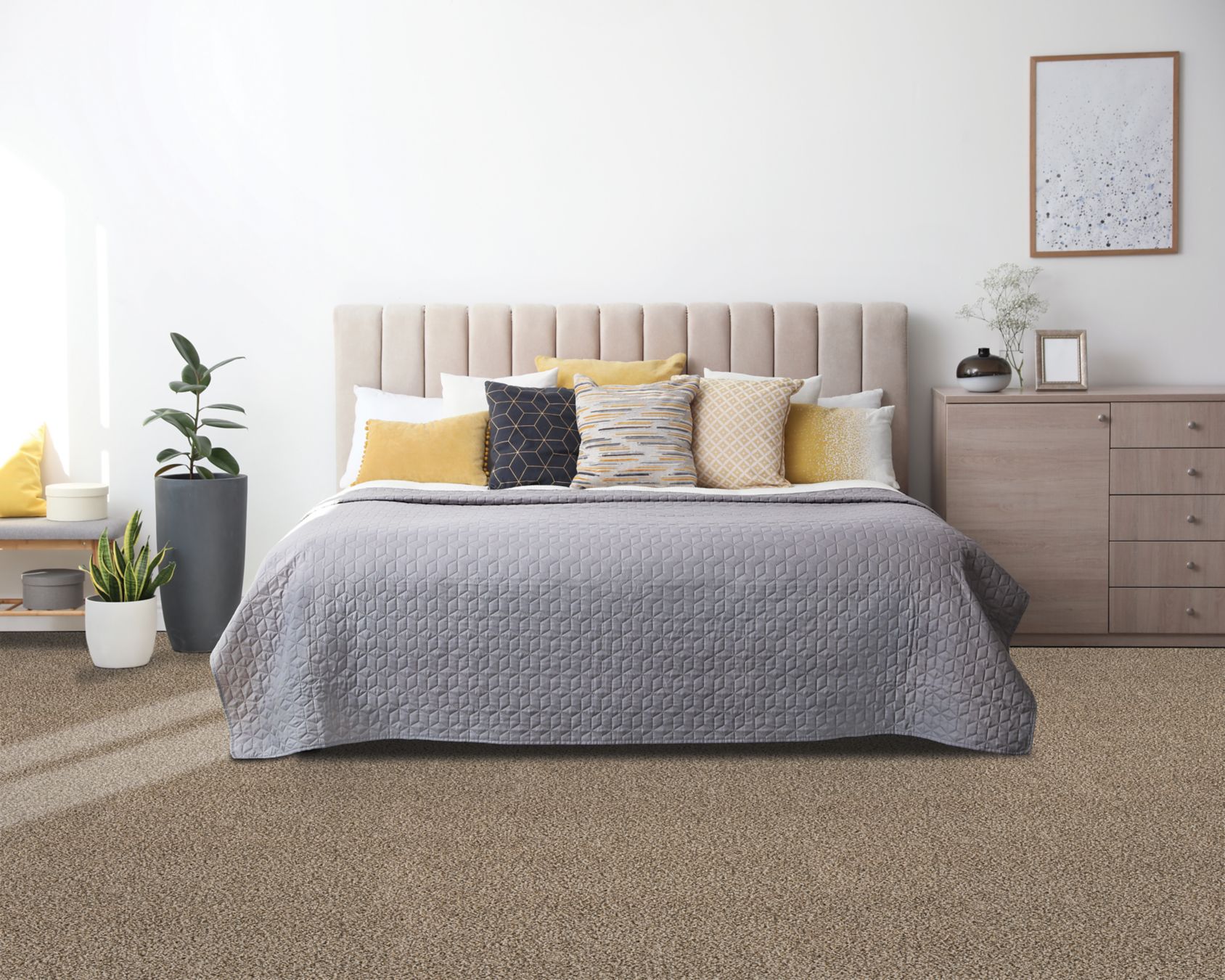
In our experience installing across the Carolinas and Georgia, most homeowners do better with two specifications in one house than with one compromise carpet everywhere. On a recent job in the Raleigh area we ran a dense, high twist carpet through the stairs and upstairs hallway and a softer, lighter one in three bedrooms, and the total landed where a single mid grade carpet throughout would have.
| Room | Density Target | Twist | Why |
|---|---|---|---|
| Stairs and hallways | 4,000 and up | 5.5 or more | Highest wear in the house, and the least forgiving of a loose pile |
| Family and living rooms | 3,100 to 4,000 | 5.0 or more | Daily traffic with furniture loads that crush a thin pile |
| Bedrooms | 2,400 to 3,100 | 4.5 or more | Low traffic, so softness costs very little in service life |
| Home offices and guest rooms | 2,400 to 3,100 | 4.5 or more | Light use, though a chair mat is worth adding under a desk |
| Homes with pets | 3,100 and up | 5.0 or more | Cut pile throughout, and confirm the warranty covers accidents |
Treat these as targets rather than hard cutoffs. A carpet slightly under the density target with a higher twist can outperform a denser one with a loose tuft.
Questions Homeowners Ask In The Living Room
What fiber is Go Flooring carpet made of?
Every carpet we install is solution dyed polyester, built as bulked continuous filament yarn. Solution dyeing puts pigment into the molten polymer before the fiber is extruded, so color runs through the whole cross section instead of sitting on the surface.
Is solution dyed polyester carpet durable?
Durability inside a single fiber type comes from construction rather than the fiber label. Pile density is the figure to read, with 3,100 and up suiting a busy household. Solution dyeing adds fade and bleach resistance because there is no surface dye layer to strip.
What is a good carpet density?
Above 3,100 for a busy household and 5,000 or higher is commercial territory. Under 2,100 is light duty only. The Carpet and Rug Institute formula is 36 times face weight divided by pile thickness in inches, with typical results landing between 1,000 and 7,000.
What is a good carpet face weight?
Residential carpet runs roughly 30 to 80 ounces per square yard, but face weight alone is not a durability measure because it ignores pile thickness. Two carpets at the same weight can differ by hundreds of density points. Ask for pile thickness alongside it.
What carpet is best for stairs?
A dense texture cut pile, preferably 4,000 or higher in density with 5.5 or more twists per inch, on a firm cushion. Stairs take the heaviest wear in the house. Avoid loop constructions entirely, since a caught loop can unravel down a whole flight.
Does Go Flooring include carpet padding?
Yes. A cushion is included with every carpet, every customer, at no extra cost. It runs 8 pound density with a 2.0 R-value, a moisture barrier with antimicrobial protection, Green Label Plus certification and a 20 year transferable abrasive wear warranty covering stairs.
Is Berber carpet good for pets?
No, and we do not install loop carpet for that reason. A claw that catches one loop transfers tension to the next, so the yarn unravels in a line rather than snagging in one spot. The trade calls it zippering. A texture cut pile cannot run, because every tuft is severed.
How often does carpet need professional cleaning to keep the warranty?
It depends on the mill, and the range is wide. Manufacturers require professional hot water extraction somewhere between every 12 and every 24 months. Products must carry the CRI Seal of Approval, and you have to keep the invoices as proof the cleanings happened.
Book A Free In-Home Consultation
Go Flooring serves North Carolina, South Carolina, Georgia, Florida, Alabama and Michigan. A consultant measures the rooms, asks about pets, kids and traffic, and brings samples with the specs on the tag so you can check the density yourself.
- A+ BBB Rated
- 4.8 Star Google Average
- Install As Fast As Tomorrow
Why Homeowners Trust Go Flooring

