
Quick Answer
The best pet friendly flooring for most homes is luxury vinyl plank with a 20-mil or thicker wear layer. It is waterproof, it resists claw marks, and it gives a dog enough grip to stand up on. Porcelain tile outlasts it and shrugs off accidents entirely, but it is hard and slick. Carpet still wins in bedrooms.
Key Notes
- Wear layer decides scratch resistance. A 20-mil or thicker LVP wear layer runs 20 to 30 years in a pet home. A 6-mil or 8-mil one shows claw marks and wear-through inside 7 to 10.
- Tile is the only material accidents cannot damage. Ceramic and porcelain last 50 to 75+ years, though grout needs resealing every 2 to 3 years and full replacement every 10 to 15.
- Janka predicts dents, not scratches. Hickory at 1,820 and hard maple at 1,450 resist a dog's nails far better than American cherry at 950 or American walnut at 1,010.
- Traction is the pet friendly flooring spec nobody asks for. A dog that cannot grip a floor slips, and an older dog with joint pain will simply avoid the room. Texture beats gloss on every one of the 5 materials.
- Carpet density is the pet spec. Above 3,100 for a household with animals, and 5 or more twists per inch anywhere traffic concentrates. Texture cut pile only, since a claw can start a run in a loop.
- The cushion under carpet does the accident work. Every carpet we install ships with an 8 pound density cushion carrying a moisture barrier that stops a spill before it reaches the subfloor.
Table of Contents
- What Pets Actually Do To A Floor
- The Best Pet Friendly Flooring Materials Compared
- Luxury Vinyl Plank
- Tile
- Laminate
- Hardwood
- Carpet
- How To Read A Pet Friendly Flooring Sample Tag
- Certifications Worth Asking For
- The Traction Problem Nobody Mentions
- Matching The Floor To The Animal
- Questions Pet Owners Ask
What Pets Actually Do To A Floor
Pet friendly flooring gets discussed as a scratching problem, and that undersells it badly. Four separate forces are at work, they hit different materials in different ways, and no single product is best at all four.
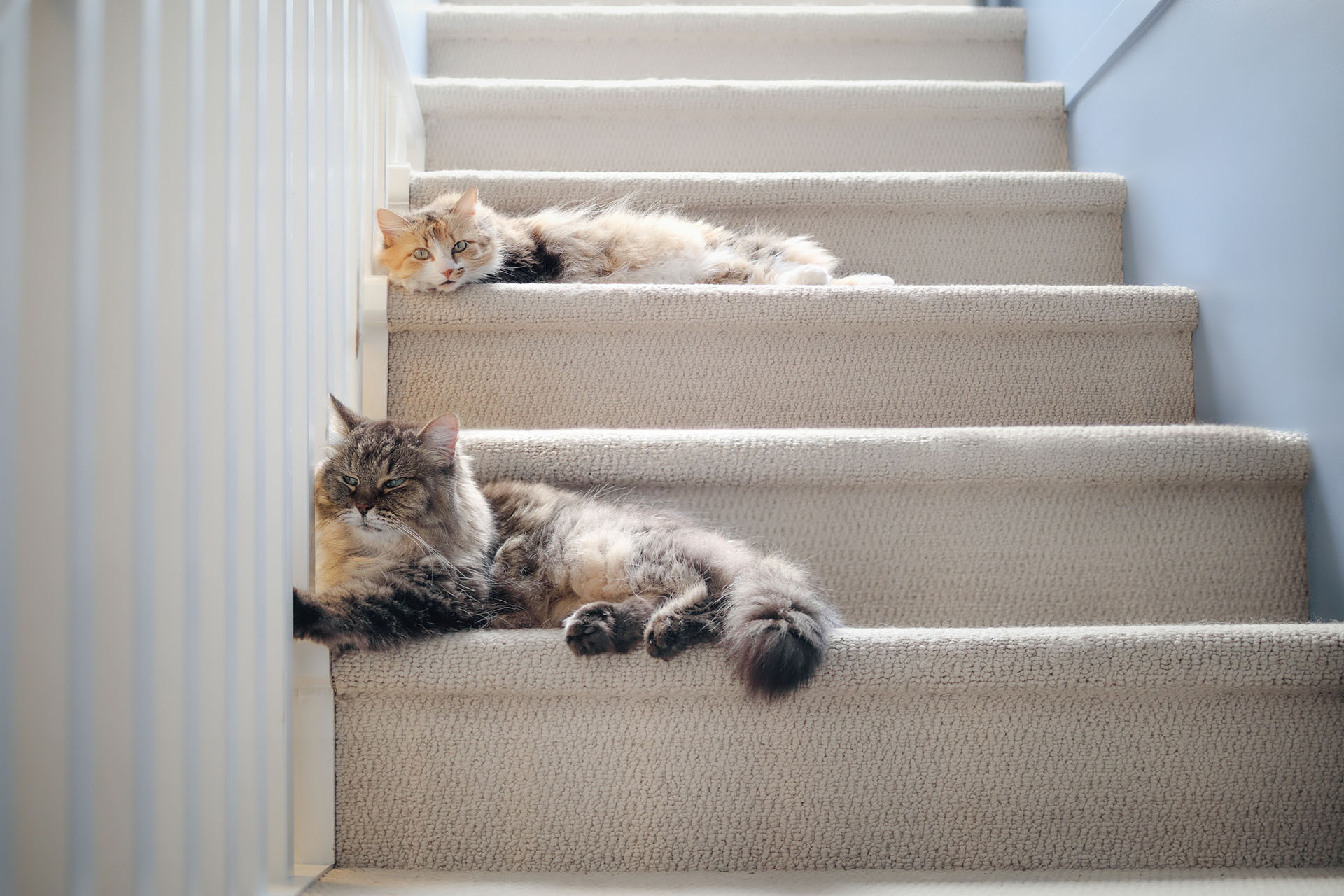
Claws abrade the surface. A dog's nails contact the floor at a steep angle under the animal's full weight, which is a different load from a chair leg dragging across it. Cats do something else entirely, since a claw catching a single fiber can start a run.
Accidents attack from above and below at once. Urine sitting on a surface is a stain problem. Urine that reaches a seam, a subfloor or a cushion becomes an odor problem, and that one does not clean out.
Then there is grit. Litter tracked out of a box, sand carried in on paws, and the dirt in a dog's coat all work like a very fine abrasive underfoot. Our crews see more floors dulled by grit than gouged by claws.
And traction, which almost nobody asks about until they own an older dog. A floor a dog cannot grip is a floor the dog will not walk on. Any honest pet friendly flooring recommendation has to weigh all four of these forces, not just the one that shows up in photos.
The Best Pet Friendly Flooring Materials Compared
Here is how the five materials we install handle each of those forces, with the spec that actually decides the outcome rather than a general durability rating.
| Pet Friendly Flooring Option | Claw Resistance | Accidents | Traction | The Spec That Decides It |
|---|---|---|---|---|
| Luxury Vinyl Plank | Strong at 20-mil and up | Waterproof through the plank | Grips on a textured finish | Wear layer in mils, plus core type |
| Tile | Claws cannot mark it | Nothing soaks in except through grout | Slick when polished | Grout maintenance cycle |
| Laminate | AC4 rated surface | 10 year waterproof warranty | Slick on a high-gloss finish | AC rating, plus the warranty terms |
| Hardwood | Dents by species hardness | Stains and cups if left wet | Grips on a matte finish | Janka rating, humidity control |
| Carpet | Cut pile cannot run | Depends entirely on the cushion | Highest in the lineup | Pile density and twist |
No column wins outright. The right choice depends on which of the four forces is loudest in your house, and that is usually the animal's age rather than its size.
Luxury Vinyl Plank
LVP is the closest thing to a default answer in pet friendly flooring, and the reason is that it is the only material in the lineup that is strong on all four forces at once rather than excellent at one and poor at another.
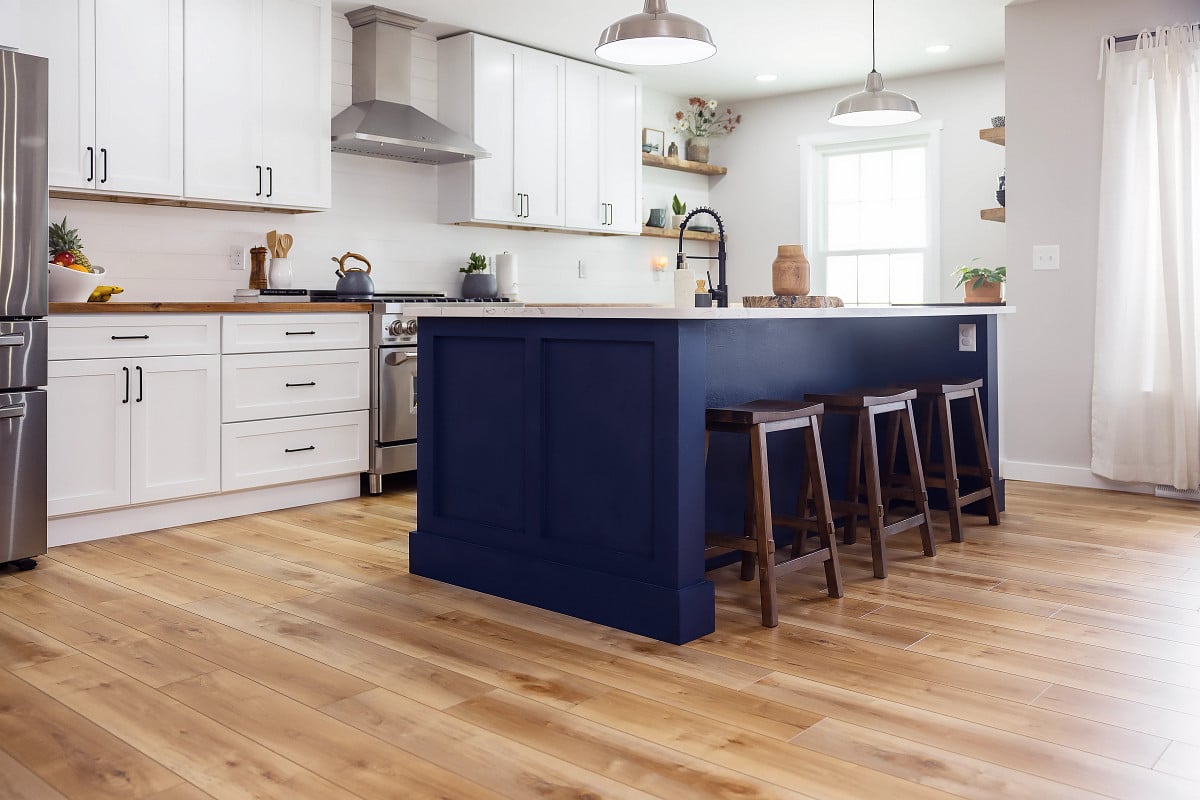
Why Wear Layer Decides Pet Friendly Flooring Performance
The spec that matters is the wear layer, measured in mils, and the range across the category is enormous. A 6-mil or 8-mil wear layer is entry-level product. In a house with a large dog it shows claw marks and traffic-lane wear inside 7 to 10 years. A 20-mil or 22-mil wear layer over an SPC core is commercial-grade material used residentially, and it runs 20 to 30 years.
The mistake we see most often is a homeowner comparing two LVP samples that look identical and choosing on color. The wear layers were 8-mil and 20-mil. One of those floors was going to fail in the same decade the dog was still a puppy.
Waterproof is the other reason it wins here. LVP is waterproof through the plank rather than water-resistant at the surface, so an accident that sits overnight does not damage the material. Seams are still the weak point over time, which is why subfloor flatness within 3/16 of an inch over a 10-foot span matters as much as the plank you picked.
Ask for a textured or embossed finish rather than a high-gloss one. Gloss reads as slick underfoot, and it also shows every scratch that does happen.
Tile
Porcelain and ceramic tile are the only materials in the lineup a claw physically cannot mark, and nothing an animal produces soaks into them. For a home with a cat that has litter box trouble, or a dog with a chronic condition, that makes tile the most durable pet friendly flooring available.
Tile also outlasts everything else at 50 to 75+ years, and it does not really wear out in residential use. Our crews have pulled up 70-year-old ceramic from kitchens with the tile itself in fine condition.
Grout Is The Weak Point In Tile Pet Friendly Flooring
Grout is the qualifier. It is porous, cement-based, and it absorbs what the tile repels. Grout needs cleaning yearly, resealing every 2 to 3 years, and full replacement every 10 to 15. In a home where accidents are frequent, that schedule is not optional, and it is a specialty service rather than something Go Flooring provides.
The real drawback is underfoot. Tile is the hardest surface in the lineup, and a polished finish gives a dog almost nothing to grip. If tile is the right call for accident resistance, choose a matte or textured surface and plan on rugs in the paths the animal actually uses.
Tile is also the only material here with a published slip number. ANSI A137.1, the standard the TCNA works from, sets a wet dynamic coefficient of friction of 0.42 as the minimum for level interior floors expected to get wet. A DCOF value at or above that is worth asking for in any room where an animal drinks, tracks in rain, or gets bathed.
Laminate
Laminate is where the gap between the category and the specific product is widest, and it is why general advice about laminate and pets tends to be wrong. The category does have a real weakness at the seams. The laminate we install is warranted against it.
What The AC Rating Tells You About Laminate Pet Friendly Flooring
Abrasion criteria, the AC rating, measures how a laminate surface holds up to wear, and it is the number that predicts claw and grit performance. AC3 covers normal residential use. AC4 is rated for heavy residential traffic, and AC4 is what we install. That rating earns its keep in a house where a dog runs the same hallway twenty times a day.
Water is the part that has changed. Most laminate on the market has a fiberboard core that swells permanently once water reaches it, and a swollen plank gets replaced rather than repaired. That is still true of the category, and it is the reason laminate carries the reputation it does. The laminate we install carries a 10 year waterproof warranty covering everyday spills and damp mopping, a lifetime pet stain warranty, and a 10 year pet scratch warranty.
Read those as warranty terms rather than as a promise the material is indestructible, because the distinction decides whether you are covered. A spill wiped up is a covered event. A leak that sits under a piece of furniture for a week is a different conversation, and that is true of every material in the lineup.
Ours is 8mm with a 2mm attached pad, which makes it thicker underfoot than most LVP and adds sound absorption. Laminate runs 15 to 25 years in normal residential service, and budget product without an AC4 rating shows wear at high-traffic spots in 7 to 10. In a pet household it is a real option rather than a compromise, and the choice between laminate and LVP comes down to whether you want the more substantial feel of laminate or the through-plank waterproofing of vinyl.
Hardwood
Hardwood is the material people most want and most often regret in a pet home, and the honest answer is that it depends heavily on the species and the animal.

Choosing Hardwood As Pet Friendly Flooring
Claws dent hardwood more than they scratch it, and species hardness predicts that directly. On the Janka scale, hickory rates 1,820 and hard maple 1,450, both of which stand up well. Red oak sits at 1,290 and white oak at 1,360. American walnut at 1,010 and American cherry at 950 are soft enough that a large dog will mark them visibly within a year.
Accidents are the harder problem. Urine left on hardwood penetrates the finish, reaches the wood, and leaves a stain that does not clean out. It also raises the grain and can cup a board if it sits long enough.
The recovery path is real but it is not ours. Solid hardwood can be sanded and refinished four to six times across its life, which is why a 60-year-old floor can come back looking new. That work is done by a refinishing specialist. Go Flooring installs new floors and does not refinish, sand or repair existing ones, so if refinishing is what your floor needs, we will point you toward someone who does it.
If hardwood is what you want with a pet in the house, treat it as conditional pet friendly flooring: choose a harder species in a matte finish, keep indoor humidity between 30 and 50 percent, and be honest with yourself about how the animal is likely to age.
Carpet
Carpet gets dismissed in pet friendly flooring conversations, and that is a mistake in bedrooms. It has the best traction of anything in the lineup by a wide margin, and for an older animal with joint problems that outweighs most of its disadvantages.
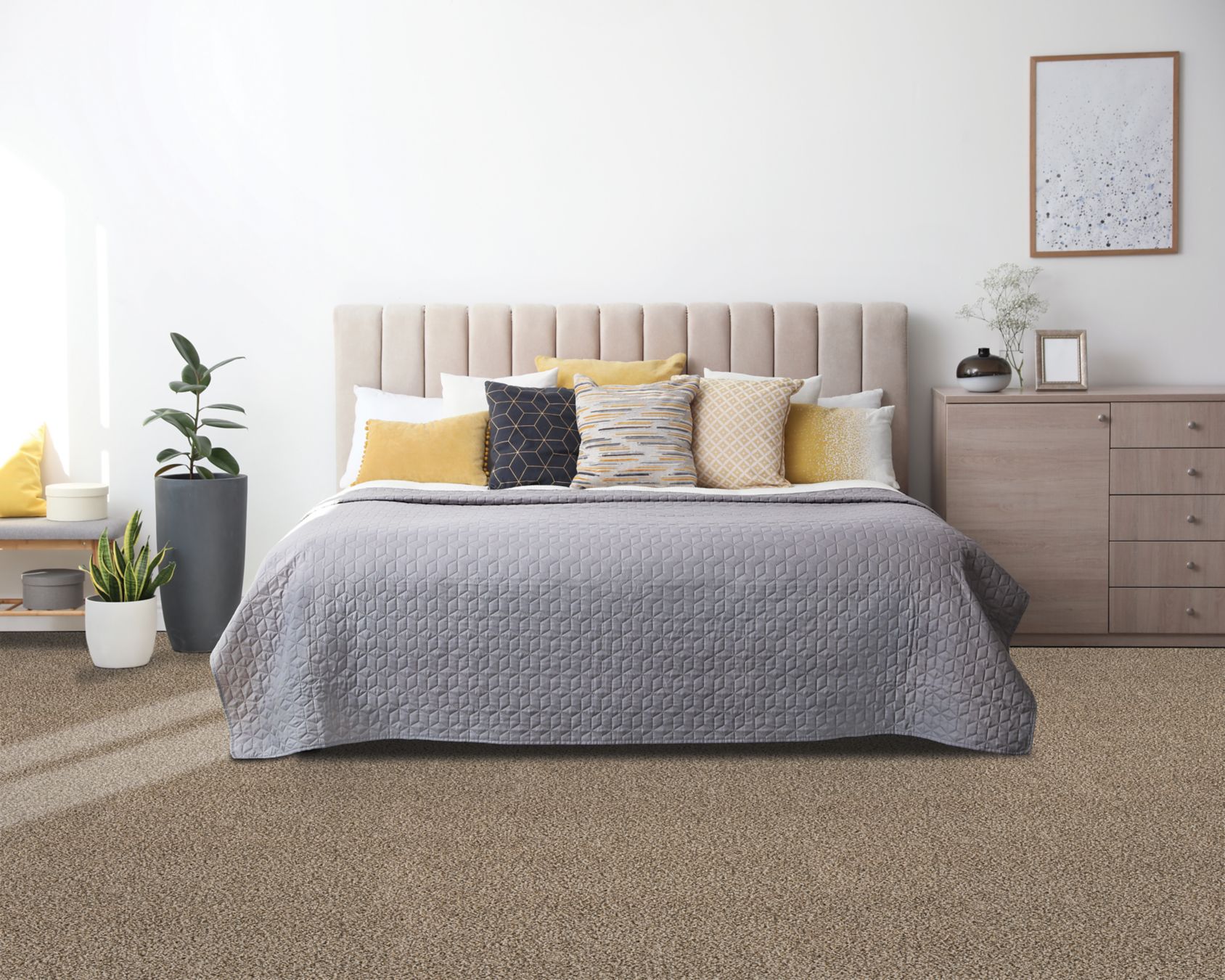
What Makes Carpet Pet Friendly Flooring
Construction is the whole conversation. Every carpet we install is solution dyed polyester in a texture cut pile, and both halves of that matter here. Solution dyeing puts pigment inside the fiber before it is extruded, so the carpet tolerates cleaning chemistry that would strip a surface-dyed fiber. Texture cut pile means every tuft is a severed end, so a claw that catches one cannot unravel a line across the room.
That is why we do not stock a loop carpet. In a continuous loop, a caught claw transfers tension straight to the next loop, and the yarn runs. The trade calls it zippering, and it is the single most common carpet failure in a house with a cat.
For density, look above 3,100 in a home with animals and 5 or more twists per inch where traffic concentrates. The formula is 36 times face weight divided by pile thickness in inches, so ask for both numbers and you can run it yourself. Our full carpet specification guide covers how to read a sample tag.
The cushion under carpet does more accident work than the carpet does. Ours includes a moisture barrier that stops a spill at the cushion instead of letting it reach the subfloor, while still allowing subfloor vapor to release upward. Antimicrobial protection is built in.
This matters because odor in a pet home almost never lives in the carpet. It lives in what the spill soaked through to. Replacing the carpet without addressing the layer underneath is how a smell comes back three months later.
Cushion is included on every carpet job, every customer, at no extra cost. It runs 8 pounds per cubic foot density with a 2.0 R-value and a 20 year transferable abrasive wear warranty that covers stairs.
One more thing worth knowing: pet accidents are not universally excluded from carpet warranties, which is the assumption most homeowners arrive with. Some of the lines we carry include pet coverage that covers accidents outright. Ask which coverage you are getting rather than assuming you have none.
How To Read A Pet Friendly Flooring Sample Tag
Every material in the lineup has one number that predicts how it will age around an animal, and every one of those numbers is printed on the sample tag. Homeowners shopping pet friendly flooring rarely ask for them. The showroom conversation runs on color and plank width instead, which is how two floors that look identical end up performing a decade apart.
At 6-mil or 8-mil the surface shows claw marks and traffic lanes inside 7 to 10 years. At 20 to 22 mil over an SPC core, plan on 20 to 30.
Hickory at 1,820 and hard maple at 1,450 sit above it. American walnut at 1,010 and American cherry at 950 fall below and dent under a large dog.
Multiply face weight by 36, then divide by pile thickness in inches. Ask a consultant for both numbers and you can run the math standing there.
AC3 covers normal residential use. AC4 is rated for heavy residential traffic and is what we install. Ask separately whether the product carries a waterproof warranty, since the two are different specs.
Two of those four numbers are frequently missing from a showroom tag, and that absence tells you something. A supplier that publishes an 8-mil wear layer will print it. A supplier that would rather you looked at the photo will not.
Traction has exactly one published number, and it covers one of the five materials. Tile carries a DCOF rating under ANSI A137.1. Nothing equivalent exists for LVP, laminate, hardwood or carpet, so on those four the only test available is the surface texture you can feel with your hand. Run a palm across the sample. If it slides without catching, the animal's paw will do the same thing.
In our experience installing across eight states, the homeowners who ask for the number on the tag are the ones still satisfied with the floor five years later. The ones who chose on the photo are the ones calling about traffic lanes.
Certifications Worth Asking For
Four certifications carry real weight in a pet friendly flooring decision, and each one belongs to a different material. None of them are marketing badges. Each is a published standard with a testing protocol behind it, and a supplier who carries the certification will say so on the tag.
- FloorScore covers indoor air quality for resilient flooring, which is the category LVP sits in. It matters more in a pet home than most people expect, because an animal spends its entire day with its face at floor level rather than five feet above it.
- The AC rating is the laminate abrasion scale, printed on the box. AC3 is normal residential, AC4 is heavy residential. It is the fastest way to separate two laminates that look identical on a showroom rack, and it is a separate question from the waterproof warranty.
- Green Label Plus covers carpet and carpet cushion emissions. Same reasoning as FloorScore, applied to the material an animal actually sleeps on. Our cushion carries it, and so do carpet lines we stock.
- ANSI A137.1 is where the tile DCOF number comes from, at a 0.42 wet minimum for level interior floors.
Hardwood has no single equivalent, but NWFA installation guidelines are the reference our crews work from, and the 30 to 50 percent indoor humidity range that keeps a hardwood floor flat comes out of them.
The Traction Problem Nobody Mentions
Every pet friendly flooring conversation covers scratches and accidents. Almost none of them cover whether the animal can stand up.
A dog's paw grips through nail contact and pad friction, and a hard, smooth floor gives it neither. Young dogs compensate. Older dogs, large breeds, and any animal with hip or joint problems do not, and the result is either repeated slipping or a dog that stops using the room. On a recent job in the Charlotte area the deciding factor was not durability at all. It was that a twelve-year-old retriever had stopped going down a hallway.
Get A Free In-Home Flooring Consultation
A Go Flooring consultant brings samples of all five materials to your house, evaluates the subfloor, and walks through which product fits each room. Bring the dog into the conversation. Age and joint health change the answer more than size does.
- Free Consultation And Samples
- Cushion Included On Carpet
- Install As Fast As Tomorrow
Matching The Floor To The Animal
Pet friendly flooring sorts cleanly across the five materials once you know which problem is loudest in your house.
Questions Pet Owners Ask
What is the best pet friendly flooring?
Luxury vinyl plank with a 20-mil or thicker wear layer is the strongest all-around choice. It is waterproof through the plank, resists claw marks, and offers reasonable traction in a textured finish. Porcelain tile is more durable but harder and slicker underfoot.
What flooring is best for dogs that scratch?
Tile cannot be marked by claws at all. Among the rest, LVP at 20-mil or thicker performs best. If you want hardwood, choose a harder species: hickory rates 1,820 on the Janka scale and hard maple 1,450, against 950 for American cherry.
Is luxury vinyl plank really waterproof for pet accidents?
Yes. LVP with a 20-mil or thicker wear layer is waterproof through the plank rather than water-resistant at the surface, so an accident that sits does not damage the material. Seams are the long-term weak point, which is why subfloor flatness within 3/16 of an inch over 10 feet matters.
Is carpet a bad idea with pets?
Not in bedrooms. Carpet has the best traction in the lineup, which matters for older animals. Choose texture cut pile above 3,100 density with 5 or more twists per inch. Avoid loop construction, since a caught claw can unravel a line across the room.
Does pet urine ruin hardwood floors?
It can. Urine penetrates the finish, reaches the wood, and leaves a stain that does not clean out. It also raises the grain and can cup a board. Solid hardwood can be sanded by a refinishing specialist, which is a specialty service rather than an installation one.
Why does my dog slip on the floor?
A dog grips through nail contact and pad friction, and a smooth, hard surface offers neither. High-gloss finishes are the worst offenders. Textured LVP, matte hardwood, textured tile and carpet all improve traction, as do runners on frequently used paths.
Are pet accidents covered by carpet warranties?
Not universally, and not never. Some of the carpet lines we carry include pet coverage that covers accidents outright, while others do not list separate pet coverage. Ask which one you are getting rather than assuming you have none.
Does laminate hold up to pets?
Better than its reputation. The laminate we install is AC4 rated for heavy residential traffic and carries a 10 year waterproof warranty, a lifetime pet stain warranty and a 10 year pet scratch warranty. Budget laminate without those terms is a different product.
Book A Free In-Home Consultation
Go Flooring serves North Carolina, South Carolina, Georgia, Florida, Alabama, Michigan, Indiana and Ohio. A consultant brings pet friendly flooring samples with the wear layer, Janka rating and density printed on the tag, so you can compare the numbers rather than the photos.
- A+ BBB Rated
- 4.8 Star Google Average
- Lifetime Installation Warranty
Why Homeowners Trust Go Flooring

