
Quick Answer
The flooring buying mistakes that cause the most regret happen before installation day. The biggest is choosing a floor for how it looks instead of how the room lives, like hardwood in a bathroom. Match the material to moisture, traffic, and your household, compare real specs instead of labels, and have the subfloor evaluated before you order.
Key Notes
- Wear layer: LVP runs from 6 mil (entry-level, 7 to 10 years) to 20 or 22 mil (20 to 30 years). The number predicts lifespan better than the label.
- Janka rating: hardwood hardness runs from 950 for American cherry to 1,820 for hickory, so the wrong species dents in the wrong home.
- Subfloor flatness: most floating floors need a subfloor flat within 3/16 inch over 10 feet, or planks flex, gap, and wear unevenly.
- Humidity: wood floors stay stable at 30 to 50 percent indoor humidity, and installing before material adjusts invites gaps or cupping.
- Laminate and water: NALFA says laminate does not belong in bathrooms unless rated waterproof; ours carries a 10-year waterproof warranty for spills and damp mopping.
- Carpet density: a pile density of 3,100 and up holds up in a busy household, and it predicts wear better than how soft a sample feels.
What This Guide Covers
Flooring Buying Mistakes at a Glance
Every one of these flooring buying mistakes shows up the same way: a floor that looked right in a showroom, installed in a room it was never built for. Here is the short version, with the detail underneath.
Product Mistakes: Choosing the Wrong Floor
Four of the flooring buying mistakes that cause the most regret are made in the first hour of shopping, before a single plank is ordered. They share a root cause: the floor gets picked as an object instead of as a material with measurable limits.
Of all flooring buying mistakes, the one we see most often is a floor chosen for the photo, not the room, and it usually shows up first in the wettest space in the house. Bathrooms, laundry rooms, mudrooms, and below-grade basements punish a bad material choice fastest. A kitchen is the middle case: it can take hardwood if spills get wiped quickly, and it takes tile or SPC-core LVP without drama. Our ranking of the best kitchen flooring walks through that room in detail.

Laminate deserves a specific note. NALFA's laminate flooring FAQ says laminate is not suited to rooms with excessive moisture, such as bathrooms, unless the manufacturer specifies it as waterproof. The laminate we install carries a 10-year waterproof warranty covering everyday spills and damp mopping, which makes it a fit for kitchens and living areas. Full bathrooms still belong to tile or LVP.
The reframe that helps most homeowners is simple. Pick the material by the room's conditions, then pick the style within that material. The hard-surface materials we install come in a wide range of wood looks and tones, so choosing by conditions first rarely takes away the look you wanted.
The same spread exists inside every category. NALFA-certified laminate runs 15 to 25 years while budget laminate lands at 7 to 10. Carpet ranges from 5 to 15 years depending on pile density and traffic. Ceramic and porcelain tile clear 50 to 75 years or more. Two products can share a category label and still be a decade apart in service life.
Core construction matters as much as the wear layer in LVP. A rigid SPC core is dense and dimensionally stable, which is why every luxury vinyl plank we install is built on one, with a 20 or 22 mil wear layer on top.

The Janka scale is the clearest example of a number that changes a decision. It measures the force required to dent a species, and the spread inside hardwood is large. American cherry sits at 950 and American walnut at 1,010, so both dent under a dropped pan or a large dog's nails. Red oak is 1,290, white oak 1,360, hard maple 1,450, and hickory 1,820. A homeowner who loves walnut and has two big dogs is making a decision, not a mistake, but only if somebody showed them the number first. Skipping that conversation is one of the quietest flooring buying mistakes.
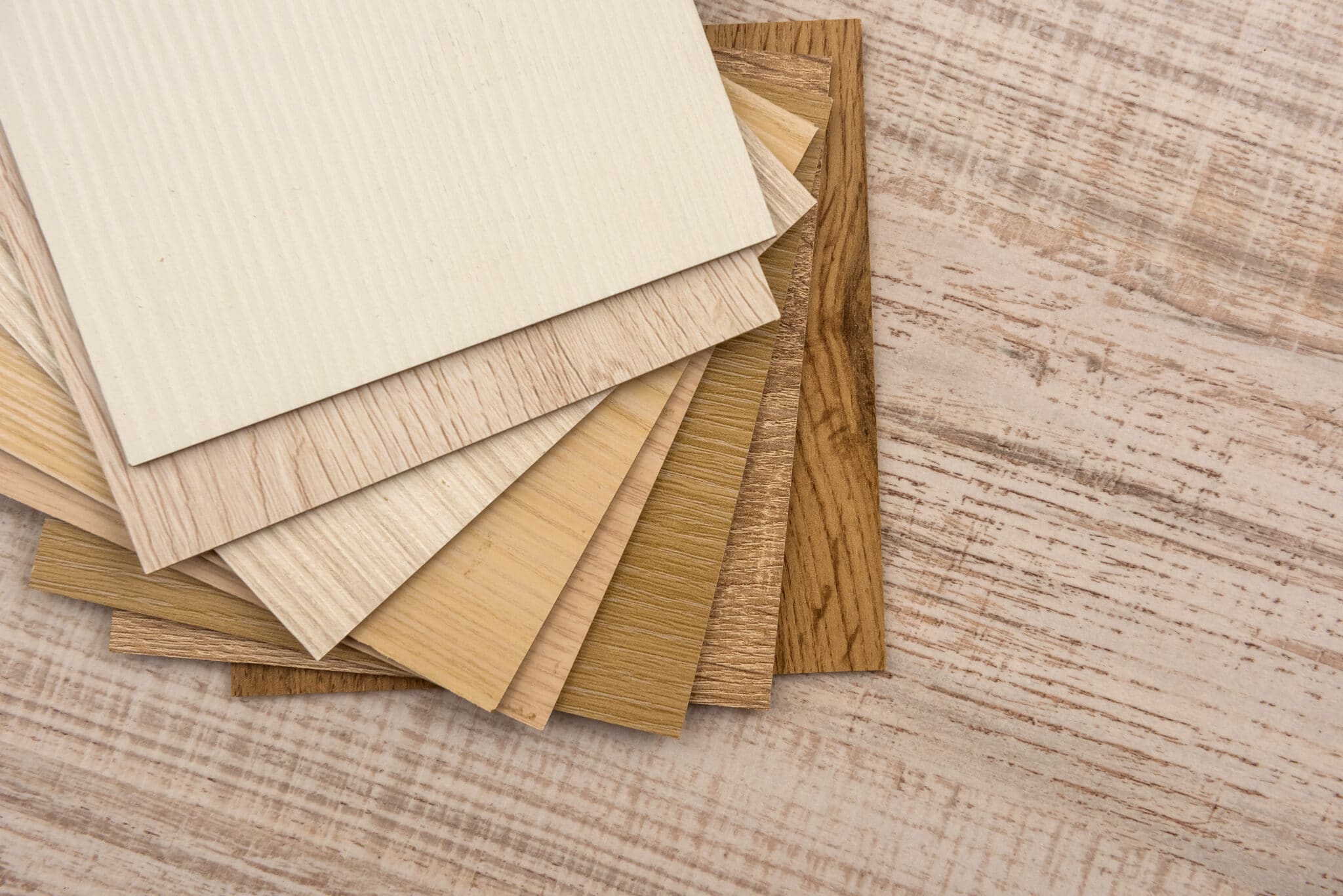
Laminate has its own scale. The AC rating, which comes from the European standard EN 13329, runs from AC1 to AC6 and describes how much abrasion the surface withstands. NALFA certifies laminate separately, against a wider set of performance tests. Our guide to what each laminate AC rating means by room matches the rating to the space.
For carpet, pile density predicts wear better than how soft the sample feels. A density of 3,100 and up holds up in a busy household. Our guide to how pile density and twist predict carpet wear explains how to read it.
Hardwood is never waterproof. Laminate varies by product, which is why the warranty language matters. SPC-core LVP is built for wet rooms. Tile is the most water-tolerant material we install, though grout is the part that needs attention: clean it yearly, reseal every 2 to 3 years, and plan on full replacement every 10 to 15 years. For a deeper look at the two most common wood looks, see our comparison of wood-look tile and real hardwood.
Preparation Mistakes: What Happens Before Install
These two flooring buying mistakes are different from the product mistakes above. They are not about which floor you picked. They are about what was underneath it and what condition it arrived in, and they are why a correctly chosen floor still fails.
We evaluate subfloor conditions during the in-home consultation, because that step, more than the plank someone picked, decides how long a floor lasts. A subfloor that needs correction changes the scope and sometimes the material recommendation. Treating the subfloor as an afterthought is one of the costliest flooring buying mistakes, and knowing its condition before product is ordered saves far more disruption than finding out after it is sitting in the garage.
Concrete slabs deserve extra attention. Moisture moves up through a slab even when the surface feels dry, which is why moisture testing is a measurement rather than a judgment call. Any installer worth hiring can tell you which test they use and what reading they need before they start.
Hardwood is the most sensitive material here, because it keeps exchanging moisture with the air for its whole life. The National Wood Flooring Association's problem prevention guidance for wood floors puts the target at 60 to 80 degrees Fahrenheit and 30 to 50 percent relative humidity, year round. Laminate and LVP move less, but they move, and a floating floor with no room at the edges is where that movement shows.
Get the Prep Right First
We Evaluate the Subfloor Before You Order
Subfloor conditions get checked during the free in-home consultation, so the material recommendation matches what is actually under your floor. Call 877-356-6770 to book.
- ✓ Free in-home consultation with samples
- ✓ Licensed, insured, and bonded
- ✓ A+ BBB rated
Process Mistakes: Buying and Installing
Two flooring buying mistakes live in how the purchase happens rather than in what gets purchased. Both are easy to avoid and both are common.
The failures are rarely in the visible part of the work. They are in the prep and the perimeter: a floating floor with no room to expand, a transition that was never planned, a slab that was never tested. Those errors surface months later, long after the tools are put away. Go Flooring installs every floor it sells, which is why prep is part of every quote.

In our experience, the homeowners happiest a year later are the ones who saw a large sample in their own light before committing. Pattern repeat is the part a chip hides completely. A grain pattern that reads as subtle variation on a four-inch sample can read as an obvious repeat across 400 square feet, and there is no way to judge that at chip scale. It is one of the most common flooring buying mistakes, and the easiest to avoid.
Lifestyle and Long-Term Mistakes
The last two flooring buying mistakes are about time: how the household will use the floor every day, and how many years the floor needs to last.
Households with big dogs and young kids usually land on LVP with a 20-mil or thicker wear layer, tile, or a harder hardwood species at 1,290 and up. Quieter adult households have more room to choose a softer species or a plusher carpet, because nothing tests the floor daily. Our guide to the most scratch-resistant flooring options covers the busy-household side.
A homeowner planning to stay 30 years and one planning to sell in 5 should weigh these numbers very differently. The full reasoning behind each range is in our flooring lifespan comparison by material.

How to Avoid Flooring Buying Mistakes: 5 Steps
The same five steps prevent almost every one of these flooring buying mistakes. This is the order our consultants work through during an in-home visit.
- 1Start with the room, not the lookDecide on moisture, traffic, and household first. Choose a material that fits those conditions, then pick the style within it.
- 2Compare numbers, not labelsWear-layer mils for LVP, Janka for hardwood, AC rating for laminate, pile density for carpet. A product that cannot produce those numbers has told you something.
- 3Have the subfloor evaluated firstFlatness and moisture decide how long the finished floor lasts, so they get checked before anything is ordered.
- 4See it in your homeLook at a large sample in your own light, against your walls, before committing.
- 5Match the floor to your timelineWeigh each material's service life against how long you plan to stay in the house.
Trade associations publish the standards behind most of these numbers, and a quick look before you shop heads off several flooring buying mistakes. The NWFA covers subfloor condition, acclimation, and hardwood performance. The Resilient Floor Covering Institute runs FloorScore indoor air quality certification for hard surface flooring. NALFA certifies laminate performance. The Tile Council of North America runs a porcelain tile certification program that confirms a tile labeled porcelain actually meets the standard.
Flooring Buying Mistakes: Common Questions
What is the biggest flooring buying mistake?
The most common of all flooring buying mistakes is choosing a floor for how it looks instead of how the room is used. Hardwood in a bathroom or a laminate not rated for wet rooms in a busy kitchen fails fast. Match the material to the room's moisture and traffic first, then pick the style.
How do I avoid buying low-quality flooring?
Compare the specs, not the labels, since that habit prevents most flooring buying mistakes. For luxury vinyl, look at the wear layer in mils and the core type. For hardwood, check the Janka rating. For laminate, check the AC rating and NALFA certification. For carpet, ask for pile density.
Does the subfloor really matter when installing new floors?
Yes. A subfloor that is uneven or holds moisture causes planks to flex, gap, and wear unevenly, and it can void the warranty. Most floating floors need flatness within 3/16 inch over 10 feet, and slabs should be moisture-tested before install.
Is it a mistake to install flooring yourself?
It can be. Floating floors look simple, but subfloor prep, moisture testing, expansion gaps, and transitions are where do-it-yourself installs fail, which can void the warranty and shorten the floor's life. For anything beyond a small area, use a licensed, insured installer.
Is all luxury vinyl plank and laminate waterproof?
No. SPC-core luxury vinyl plank is built for wet rooms. Laminate varies, and NALFA says it does not belong in bathrooms unless the manufacturer rates it waterproof. Hardwood is never waterproof. Read each product's own water rating and warranty before buying.
Should I buy flooring from a small sample?
A small chip is misleading, because flooring looks different across a full room and in your own lighting. Color, grain, and pattern repeat shift at scale. See a large sample in the actual room, in your light, before you commit.
How long should new floors last?
It depends on the material and the spec. Solid hardwood runs 50 to 100 years or more, tile 50 to 75, LVP with a 20-mil wear layer 20 to 30, certified laminate 15 to 25, and carpet 5 to 15. Weigh that against how long you plan to stay.
How do I choose the right flooring for my home?
Start with the room, not the look. Decide based on moisture, traffic, and your household, including pets and kids, then choose a material that fits those conditions and pick the style within it. A free in-home consultation is the simplest way to avoid flooring buying mistakes room by room.
We Bring The Showroom To You
See the Right Floor for Each Room
Bring us the rooms and how you live in them. A consultant brings hardwood, laminate, LVP, tile, and carpet samples, evaluates the subfloor, and walks through which material fits where. Call 877-356-6770 to schedule.
- ✓ Free in-home consultation
- ✓ A+ BBB rated, 4.8-star Google rating
- ✓ 2026 Gold Titan Business Award

