
Hardwood floors have a certain magic – they age well, hold up to everyday life, and instantly make a space feel more grounded.
But if you’ve ever priced them out, you know “real wood” can come with some real sticker shock. The thing is, affordable options do exist – you just need to know where to look and what trade-offs make sense.
We’ll break down everything to know about affordable hardwood flooring in 2025.
Key Notes
- Affordable hardwood averages $8-$15/sq ft installed; engineered beats solid for value.
- Red oak, white oak, and maple are the cheapest domestic species at $4-8/sq ft materials.
- Floating or click-lock installation cuts labor costs by 30-50% versus nail-down.
- Refinishing existing floors at $3-5/sq ft is far cheaper than full replacement.
What Counts as “Affordable Hardwood Flooring” in 2025?
In today’s market, affordable hardwood flooring generally means paying between $8 and $15 per square foot installed, depending on the wood species, installation method, and finish.
Here’s how that typically breaks down:
- Budget hardwood floors: Around $8–$12 per sq. ft. installed
- Premium hardwood floors: $15–$25+ per sq. ft. installed
The lower end of that range usually includes common, domestically sourced species like red oak, white oak, or maple, often in engineered or prefinished formats. These options deliver the look and feel of real hardwood without the premium price tag.
The main factors that affect cost are:
- Material type (solid vs. engineered)
- Wood species
- Finish type (prefinished vs. unfinished)
- Installation method and labor
- Subfloor prep and room layout
So if you’re quoted $8–$12 per sq. ft. for red oak engineered hardwood, you’re right in the “affordable” zone.
Most Affordable Types of Hardwood Flooring
Hardwood flooring isn’t one-size-fits-all. The construction method you choose – engineered, solid, prefinished, or unfinished – can make a major difference in cost.
Engineered Hardwood: Best Overall Budget Option
Engineered hardwood is your best bet for authentic wood looks at a friendlier price.
Instead of a single solid plank, it has a real hardwood veneer over layers of plywood or composite material. That layered construction makes it more stable and moisture-resistant – and less expensive.
- Cost: $9–$20 per sq. ft. installed
- Pros: Budget-friendly, durable, suitable for basements or concrete subfloors, easier to install (floating or click-lock)
- Cons: Can only be refinished once or twice due to thin veneer
Engineered wood often comes prefinished, so installation is quicker, cleaner, and more affordable overall.
Solid Hardwood: Classic but Pricier
Solid hardwood is a single piece of wood through and through. It’s durable and can last 50–100 years with refinishing, but you’ll pay more upfront.
- Cost: $11–$25 per sq. ft. installed
- Pros: Long lifespan, can be refinished multiple times, adds resale value
- Cons: More expensive, sensitive to moisture, higher labor cost
If you’re set on solid wood, choose domestic species and lower grades (more knots and character) to stay within budget.
Prefinished vs. Unfinished Hardwood
Prefinished hardwood is factory-sealed before installation. It costs more per plank but less in labor. Unfinished hardwood requires sanding, staining, and sealing after installation – adding time and labor cost.
| Type | Material Cost | Installation Cost | Total Installed |
|---|---|---|---|
| Prefinished | $5–$20/sq. ft. | $3–$5/sq. ft. | $8–$25/sq. ft. |
| Unfinished | $3–$15/sq. ft. | $4–$10/sq. ft. | $7–$25/sq. ft. |
Prefinished saves time, while unfinished gives you full control over color and finish – ideal if you’re matching existing floors.
Cheapest Hardwood Flooring Species
If you’re trying to keep costs low, stick with domestic hardwoods. These species are readily available, sustainably sourced, and timeless in appearance.
Top Budget-Friendly Woods:
- Red Oak: Warm tones, classic grain, widely available. Starts around $4–$8 per sq. ft. (materials).
- White Oak: Modern gray undertones, slightly denser and more water-resistant. Around $5–9 per sq. ft.
- Maple: Smooth grain, clean aesthetic, budget-friendly. Around $4–8 per sq. ft.
- Birch: Subtle grain, light color, affordable and easy to stain. Around $4–7 per sq. ft.
- Hickory: Harder than oak but still reasonably priced. Around $6–10 per sq. ft.
Why Do Domestic Woods Cost Less?
- Abundant North American supply
- Shorter transport distances
- Established milling and distribution
- Available in lower grades (more character = lower cost)
Exotic Woods to Avoid on a Budget
If you’re aiming for affordability, skip imported hardwoods like Brazilian cherry, teak, mahogany, or walnut. They look stunning, but import costs and scarcity can double or triple your budget.
Installation Methods That Lower Costs
Labor makes up a big chunk of your total cost – often 30–50%. Choosing the right installation method can save hundreds.
| Method | Labor Cost (sq. ft.) | Ideal For | Cost Efficiency |
|---|---|---|---|
| Floating | $3–$6 | Engineered floors | Best value |
| Click-Lock | $3–5 | DIY-friendly | Most affordable |
| Nail-Down | $4–7 | Solid hardwood | Mid-range |
| Glue-Down | $5–8 | Concrete subfloors | More costly |
Floating and click-lock installations are your wallet-friendly choices – especially with engineered hardwood. They require minimal prep and are faster to install, which cuts labor time.
Nail-down or glue-down methods offer stability and longevity but increase both time and cost.
Hidden Costs to Watch Out For
Budgeting for materials and installation alone isn’t enough. Homeowners are often surprised by hidden costs that can add several dollars per square foot.
Common extras include:
- Subfloor preparation: Leveling, repairs, or moisture barriers ($2–5 per sq. ft.)
- Old floor removal/disposal: $1.50–3.50 per sq. ft.
- Baseboards and trims: Essential for a finished look but often not included in quotes
- Furniture moving: Installers may charge extra for heavy or bulky furniture
- Cleanup: Post-install cleanup and haul-away aren’t always part of the job
- VOC concerns: Ultra-cheap floors can off-gas harmful chemicals – worth checking before buying
A 300 sq. ft. room can easily add $500–1,000 in extra costs if you don’t plan for these details upfront.
Smart Ways to Save on Hardwood Flooring
If you want affordable hardwood that still looks premium, focus on value – not just price.
- Go engineered: You’ll get the look of hardwood for less, with better moisture resistance.
- Choose rustic-grade boards: More knots and color variation = lower cost, trendy look.
- Pick prefinished: You’ll skip sanding and staining labor entirely.
- Install during off-season: Winter or early spring often means better availability and discounts.
- Shop local: Domestic suppliers may offer better pricing and faster turnaround.
- Use free installation promos: At Go Flooring, we include free installation on qualifying orders.
- Refinish instead of replace: Sanding and re-staining existing wood floors can create a brand-new look for a fraction of the cost.
Affordable Alternatives That Still Look Like Hardwood
If you love the look of wood but your budget says otherwise, consider wood-look alternatives. They’re realistic, durable, and often half the price of real hardwood.
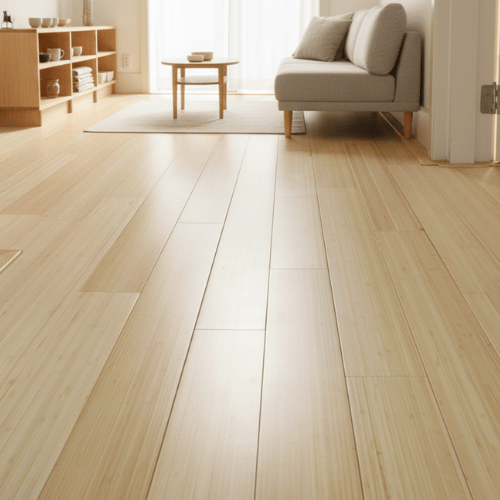
Bamboo
Made from fast-growing bamboo grass, this eco-friendly material is surprisingly tough – even harder than oak. It offers modern style and sustainability, often at a similar or slightly lower price than mid-range hardwood ($6–12 installed).
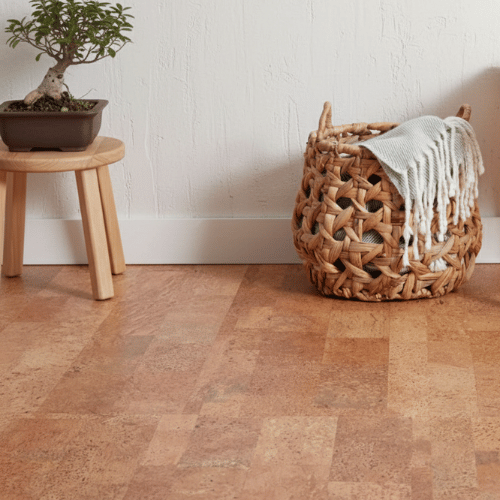
Cork
Soft, warm, and quiet underfoot, cork is made from the bark of cork oak trees. It’s more affordable than most hardwoods but can wear faster in high-traffic areas.
Hybrid Composite Floors
These combine a wood veneer with a rigid core (like SPC or WPC). They’re waterproof, scratch-resistant, and great for busy households – plus, they cost less than solid wood.

Laminate & Luxury Vinyl Plank (LVP)
While not real wood, modern laminate and LVP have incredibly realistic textures and finishes. They’re affordable ($3–10 installed), waterproof, and ideal for kitchens, basements, or rentals.

Refinishing & Upgrading on a Budget
One of the best-kept secrets in flooring? You can make cheaper hardwood look expensive with refinishing or staining.
Refinishing involves sanding and resealing, which removes scratches and restores shine. Staining lets you change the tone entirely – turning light oak into a deeper, more luxurious color.
A professional refinish costs $3–5 per sq. ft., much cheaper than replacing floors. Even DIY buff-and-coat kits can make a dull floor look new again.
Refinishing doesn’t change the wood species, but it absolutely upgrades the overall look and feel – especially for homeowners on a budget.
Frequently Asked Questions
Can I install affordable hardwood flooring in basements or humid areas?
Yes, but stick with engineered hardwood, not solid wood. Engineered options handle moisture and temperature changes better, making them suitable for basements or below-grade spaces.
How long does affordable hardwood flooring typically last?
With proper care, budget-friendly engineered or domestic hardwood floors can last 20–40 years. Regular cleaning and occasional refinishing extend their lifespan significantly.
Is cheap hardwood flooring more likely to warp or scratch?
Lower-cost floors can be more prone to surface wear if not sealed properly, but using prefinished boards with durable coatings helps prevent scratches, dents, and moisture damage.
Can affordable hardwood increase my home’s resale value?
Yes – real hardwood, even in budget ranges, usually boosts resale appeal. Buyers prefer authentic wood over laminate or vinyl, especially when it’s well-maintained and professionally installed.
Conclusion
Affordable hardwood flooring comes down to knowing what truly drives cost – and what doesn’t.
Engineered boards often give you the same beauty and warmth as solid wood for far less. Domestic species like oak and maple stay budget-friendly without sacrificing quality, and prefinished options save both time and labor. Even a simple refinish can make older floors feel brand new again.
With the right approach, you can get durable, great-looking hardwood that fits comfortably within your budget. Book a free in-home consultation to see flooring samples, compare pricing, and find the best hardwood option for your space and lifestyle.

