


Hardwood-style floors never really lose their charm. They add warmth, value, and that “finished” feel to any space.
But choosing between engineered hardwood and luxury vinyl plank can get tricky fast. One feels timeless and natural, the other modern and worry-free.
So, which one makes sense for your home, budget, and lifestyle? We’ll break down the differences – from cost and care to comfort and everyday durability.
Key Notes
- Engineered hardwood costs $7-$20/sq ft installed, while LVP runs $5-$16/sq ft.
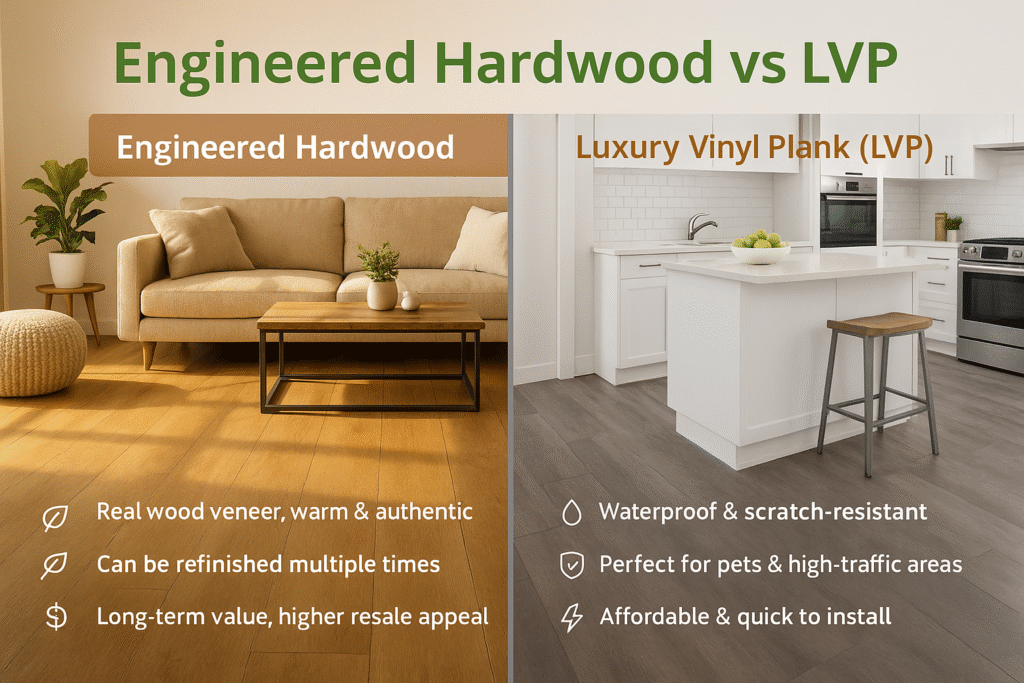
- LVP waterproof and pet-proof; engineered hardwood is refinishable for longevity.
- Engineered hardwood lasts 20-40 years with refinishing; LVP 10-25 years.
Engineered Hardwood vs LVP: Quick Answer
- Style-first: Engineered hardwood
- Budget-first: LVP
- Pets and kids: LVP
- Moisture-prone rooms: LVP
- Long-term resale value: Engineered hardwood
Choose Engineered Hardwood If:
You want the authentic look and feel of real wood, plan to live in your home for a long time, care about resale, and do not mind a little maintenance along the way.
Choose LVP If:
You need top-tier water resistance, have pets or kids with high-energy floors, want a lower total project cost, or need a fast install that will not stress your schedule.
What Each One Is
Engineered Hardwood
Engineered hardwood is real wood on top and smart engineering underneath.
The top layer is a genuine hardwood veneer. Beneath it are multiple cross-laminated layers of plywood or high-density fiberboard that add stability. That layered build helps resist movement from humidity and temperature swings better than solid hardwood.
You still get the warmth and depth that only real wood delivers, with a little more forgiveness.
Where It Shines: Design-led spaces, living rooms and bedrooms, homes that value classic beauty and long-term value, and projects where refinishing later is part of the plan.
Luxury Vinyl Plank (LVP)
Luxury Vinyl Plank is a man-made plank designed to copy the look of wood. It has a printed photo layer for the grain and a tough wear layer on top for protection.
Cores come in a few flavors:
- SPC (stone polymer core): Firm, stable, dent-resistant
- WPC (wood polymer core): Slightly softer underfoot, a touch warmer
- Flexible LVP: Thinner, budget-friendly, very DIY friendly
Where It Shines: high-traffic homes, rentals, basements, kitchens and baths, or any space where water and messes are part of daily life.
Side-by-Side Comparison
| Feature | Engineered Hardwood | LVP (Luxury Vinyl Plank) |
|---|---|---|
| Material & Construction | Real wood veneer over layered core | PVC vinyl plank with printed wood image and clear wear layer |
| Look & Realism | Authentic wood depth and variation | Very convincing at first glance, patterns can repeat up close |
| Water Resistance | Moisture-tolerant, not waterproof | Highly water-resistant, often marketed as waterproof |
| Scratch & Dent Resistance | Can scratch or dent; can be refinished | Very resistant to everyday wear, great for pets and kids |
| Lifespan | 20–40+ years depending on veneer and care | About 10–25 years depending on quality and wear layer |
| Repairability | Can be sanded and refinished if veneer allows | Replace individual planks when damaged |
| Comfort & Feel | Warm, natural, premium underfoot | Slightly softer underfoot, quieter with underlayment |
| Installation Difficulty | Pro install recommended; acclimation needed | DIY friendly; click-lock floating is common |
| Maintenance Effort | More careful cleaning; avoid excess water | Simple cleaning; damp mop is fine |
| Average Cost Installed | About $7–$20 per sq ft | About $5–$16 per sq ft |
| Resale Value | Strong, especially in main living spaces | Good in practical spaces, not equal to real wood |
| Eco Considerations | Uses real wood veneer; choose responsible sourcing | PVC-based; consider indoor air quality certifications |
Cost & Value Breakdown
We will keep this simple and honest. Typical installed price ranges we see in the US for 2025:
- Engineered hardwood: about $7–$20 per sq ft installed
- LVP: about $5–$16 per sq ft installed
What Pushes Cost Up Or Down:
Engineered Hardwood: Wood species, veneer thickness, finish type, board width, and site conditions. Thick wear layers and premium species cost more but add real longevity and refinishing potential.
LVP: Wear layer thickness, SPC vs WPC core, emboss-in-register textures, and brand warranties. Heavier, more realistic planks with 20 mil wear layers sit at the higher end.
Hidden Costs To Plan For:
- Subfloor prep or leveling
- Removal and disposal of old floors
- New trims, transitions, reducers, and baseboards
- Stairs, landings, pattern layouts, or custom details
- Moving and replacing furniture
Long-Term Value:
Engineered hardwood: Can be sanded and refinished when the wear layer is thick enough. Refinishing typically costs less than tearing out and replacing. Over 20–40 years, that flexibility can save money.
LVP: You cannot refinish it. You replace planks if they are damaged. Upfront cost is lower, which is great for rentals and high-traffic spaces. Expect replacement at the 10–25 year mark depending on quality and use.
Bottom Line:
If you love real wood and plan to stay put, engineered hardwood is a smart long-term investment. If you prefer low upkeep and water worries off your plate, LVP stretches your dollars further today.
Durability, Water & Daily Wear
Water Resistance:
LVP is the clear winner here. It handles splashes and puddles better, which is why it is a go-to for kitchens, baths, and basements.
Engineered hardwood tolerates humidity better than solid wood but is still wood. Keep it dry, wipe spills quickly, and you will be happy.
Scratches and Dents:
LVP’s durable wear layer resists claw marks, chair scoots, and toy traffic.
Engineered hardwood will show scratches over time, especially in busy spots. The upside is that engineered hardwood can be refinished or professionally touched up.
Sunlight:
Both can fade. Use shades or rugs in bright rooms. Engineered hardwood can be toned during a refinish. LVP depends on UV stability of the product you choose.
Lifespan and Repair Options
Engineered Hardwood Lifespan:
20–40 years is the typical range. The thicker the wear layer, the more times you can refinish.
As a rule of thumb: around 2–4 refinishes are possible with a 3–6 mm wear layer. Each sand removes close to a millimeter, so quality matters.
LVP Lifespan:
Most residential products last about 10–25 years. The big lever is wear layer thickness and the reality of your home. Busy households should aim for 20 mil wear layers or more.
Installation: Timeline, Skill & Disruption
Engineered Hardwood:
Often needs acclimation so the wood adjusts to your home’s humidity. Installs can be nail-down, glue-down, or floating. Subfloor flatness matters. Stairs and transitions take skill. This is where professional installation pays off.
LVP:
Click-lock floating systems are straightforward and fast. Many products can go over existing floors if they are smooth and secure.
No acclimation is usually required, which speeds things up.
How Long Installs Take:
LVP can be completed quickly, sometimes in a single day for average rooms. Engineered hardwood installs take a bit longer, especially if there is acclimation, leveling, or custom patterns.
Maintenance and Everyday Care
Engineered Hardwood:
- Sweep or vacuum with a soft brush often
- Use hardwood-safe cleaner with a barely damp mop
- Wipe spills immediately
- Use felt pads and keep pet nails trimmed
- Maintain indoor humidity between 35 and 55 percent
- Refinish when wear shows
LVP:
- Sweep or vacuum regularly
- Damp mop with vinyl-safe cleaner
- Use furniture pads and entry mats
- Replace planks when damage occurs
Kid & Pet Proofing Tips:
- Entry mats at doors catch grit
- Felt pads on chairs and sofas
- Use area rugs in heavy play zones
Comfort, Acoustics & Underfoot Feel
Thermal Feel:
Engineered hardwood has that natural warmth many people love. LVP feels slightly softer underfoot, especially with WPC cores and good underlayment.
Sound:
Floating floors benefit from quality underlayments. If you live in a multi-story home, ask us about sound ratings and products that reduce footfall noise.
Radiant Heat Compatibility:
Both engineered hardwood and LVP can work well over radiant systems.
Follow manufacturer temperature limits, usually topping out around 80 to 85 degrees Fahrenheit. Engineered hardwood still needs the same humidity sweet spot for long-term health.
Design and Aesthetics
Engineered Hardwood Look:
You are choosing a real wood veneer. Species like white oak, oak, and cherry give you authentic grain, natural variation, and the option to refinish later if you want a color update. Wider planks feel modern and open. Wire-brushed textures hide wear nicely.
LVP Look:
Advanced printing and emboss-in-register textures are very persuasive. Up close, pattern repeat is the tell. Look for varied plank images per box and beveled edges for a more realistic look.
Choosing Plank Width & Color:
Light floors make rooms feel bigger. Dark floors feel cozy and grounded.
If your home has low natural light, pick mid-tones or lighter woods. If you already have lots of wood tones in cabinets and furniture, take home samples to make sure undertones play well together.
Room-by-Room Recommendations
- Kitchens: LVP preferred. Spills and heavy foot traffic are daily life. Engineered hardwood can work if you are diligent with cleanup and humidity, but LVP is the lower-stress choice.
- Bathrooms and laundry: LVP. Waterproof wins.
- Basements: LVP. It handles moisture swings without drama. If you really want wood downstairs, plan serious moisture control and talk through risks first.
- Living rooms and bedrooms: Engineered hardwood. This is where real wood shines. Quiet, warm, and classic.
- Rental units and high-traffic spaces: LVP. Tough, easy to clean, and simple to replace individual planks between tenants.
- Entryways and mudrooms: LVP. Rain, boots, and grit are constant here.
Resale Value and Buyer Perception
Buyers notice real wood. Engineered hardwood in the main living spaces signals quality and can help resale in most markets. LVP also shows very well when it is a high-quality product in the right rooms, especially kitchens, baths, and basements.
The strong play for resale is a mix: wood where it adds perceived value, LVP where practicality wins.
Health, Safety & Eco Considerations
Indoor Air Quality:
Look for low-VOC finishes and adhesives for engineered hardwood and third-party certifications on LVP for emissions and safety.
Sustainability Snapshot:
Engineered hardwood uses less slow-growing hardwood than solid wood because the veneer is thinner. Choose responsibly sourced species.
LVP is PVC-based and not biodegradable, so many homeowners weigh that against its long service life and water resistance.
There is no perfect answer here. Pick what aligns with your values and your home’s realities.
Allergy Friendliness:
Both are easy to keep dust-free. Area rugs with washable pads give you the best of both worlds.
Frequently Asked Questions
Can engineered hardwood and LVP be mixed in the same home?
Yes – many homeowners use engineered hardwood in main living spaces and LVP in kitchens, bathrooms, and basements. The key is choosing colors and plank widths that blend naturally between rooms.
Does LVP need an underlayment?
Most modern LVP has an attached pad, but a separate underlayment can improve sound absorption and comfort. Always check the manufacturer’s recommendations for your subfloor type.
How do temperature changes affect each floor?
Engineered hardwood expands and contracts slightly with humidity changes, so maintaining a stable indoor environment helps. LVP is dimensionally stable and handles temperature swings better, making it ideal for basements and sunrooms.
Which floor is better for allergy sufferers?
Both are great choices because they don’t trap dust or allergens like carpet. However, LVP edges out for easier cleaning in homes with pets or seasonal allergies.
Conclusion
Both engineered hardwood and LVP bring something valuable to the table.
If you’re focused on long-term investment, authentic texture, and the ability to refinish down the road, engineered hardwood wins. But if your home sees constant spills, pet traffic, or humidity swings, LVP makes everyday life simpler – waterproof, durable, and easy to maintain.
The right choice really depends on how you live, not just how your floors look.
Book your free in-home appointment to compare engineered hardwood vs LVP side by side, see how they look under your own lighting, and get a clear, all-in quote tailored to your space, style, and budget.

